FIRST APPLICATION / TRAFFIC

Traffic measurements.
From the cameras
you already have.

For traffic consultants, agencies, researchers, and infrastructure operators who have video—and need measurements they can review.

Apply for a Traffic Pilot ↗
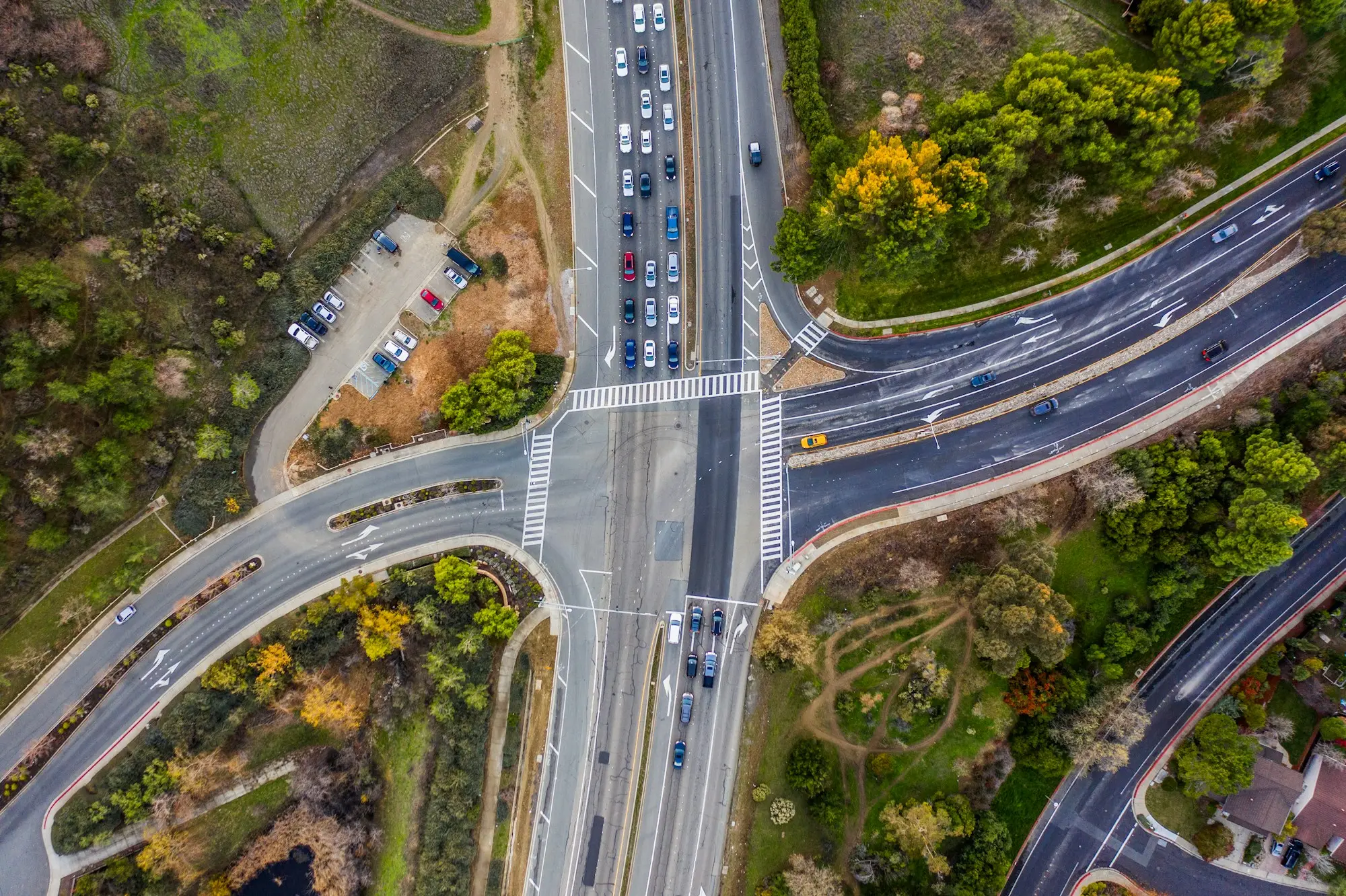
Aerial view of a four-way intersection in Concord, California, with vehicles, turning lanes, and crosswalks.
SITE OBSERVATION / TRAFFICILLUSTRATIVE OVERLAY
01 / SCENE CONTEXTOne place. Defined relationships.
02 / MOVEMENTFrom objects to trajectories.
└────┘ SCENE GEOMETRY · CONCEPTUAL
Reference imagery. Geometry and paths illustrate the concept; they are not measured results.Photo: Tyler Casey / Unsplash ↗
DETECTIONS→TRAJECTORIES→MOVEMENTS→MEASUREMENTS→REPORT

MEASURE WHAT MATTERS

Start with a question.
Define the measurement.

Applications available for scoping in a pilot. Outputs depend on footage quality, scene configuration, and the agreed requirements.

01

Turning movement counts

APPROACH → TRAJECTORY → EXIT

Measure how traffic moves through an intersection, with defined approaches, exits, and movement classifications.

  • Vehicles, pedestrians, bicycles, and relevant classes
  • Time-binned counts by defined movement
  • CSV / Excel outputs and reports with evidence for review
02

Roadway & highway volumes

DIRECTION × CLASS × TIME

Count traffic over defined intervals on arterials, highways, and other roadways. Match the measurement to the camera coverage.

  • Traffic volume and directional counts
  • Lane-level counts where geometry permits reliable assignment
  • Vehicle classification where supported by the footage
03

Pedestrians & micromobility

MOVEMENT THROUGH DEFINED SPACE

Understand movement through crosswalks, sidewalks, and shared spaces, with attention to visibility and small-object resolution.

  • Pedestrian and bicycle counts
  • Trajectories and movement patterns
  • Defined interactions where footage and scope support review
04

Site-specific monitoring

ZONE + TIME + OPERATIONAL DEFINITION

Define the observable conditions that matter to an operation, beyond standard traffic counts.

  • Stopped or stalled vehicles in roadway zones
  • Loading arrivals, departures, dwell time, and occupancy
  • Curb activity and unusual vehicle classes

BEFORE WE COUNT

The camera determines
what’s possible.

We evaluate the footage before agreeing to a measurement. A camera that supports vehicle counts may not support reliable lane assignment or pedestrian classification.

Coverage & geometry

Are the relevant approaches, lanes, and zones visible?

Resolution & occlusion

Can the relevant objects be distinguished and tracked?

Lighting & conditions

Do shadows, weather, or nighttime conditions affect the result?

Definitions & validation

What counts, what does not, and how will results be checked?

TAILORED PERCEPTION

Your site may require
something different.

Your site may not look like our previous sites.

We can adapt scene definitions and, where necessary, the underlying vision models to the conditions and objects that matter to your deployment.

Describe an unusual vehicle class, a loading operation, a pedestrian movement, or another observable condition. We’ll assess the requirement and the footage before proposing an approach.

Tell us what you need to measure ↗

LET’S DEFINE THE MEASUREMENT

Apply for a
Traffic Pilot.

Start with the question you need to answer. We’ll review your requirements and discuss whether your footage can support them.

  1. 01 Describe your site and measurement.
  2. 02 We assess coverage and feasibility.
  3. 03 Together, define scope and outputs.

Prefer a conversation?

contact@parallelsight.com ↗
This form prepares an email for you to review and send. Fields marked * are required.
What do you need to measure? *

Select one or more.

Please do not include confidential footage or personal information about people captured on camera. We can arrange an appropriate way to share footage later.